
Also, a diagram of the Renin Angiotensin Aldosterone System (RAAS System) physiology.
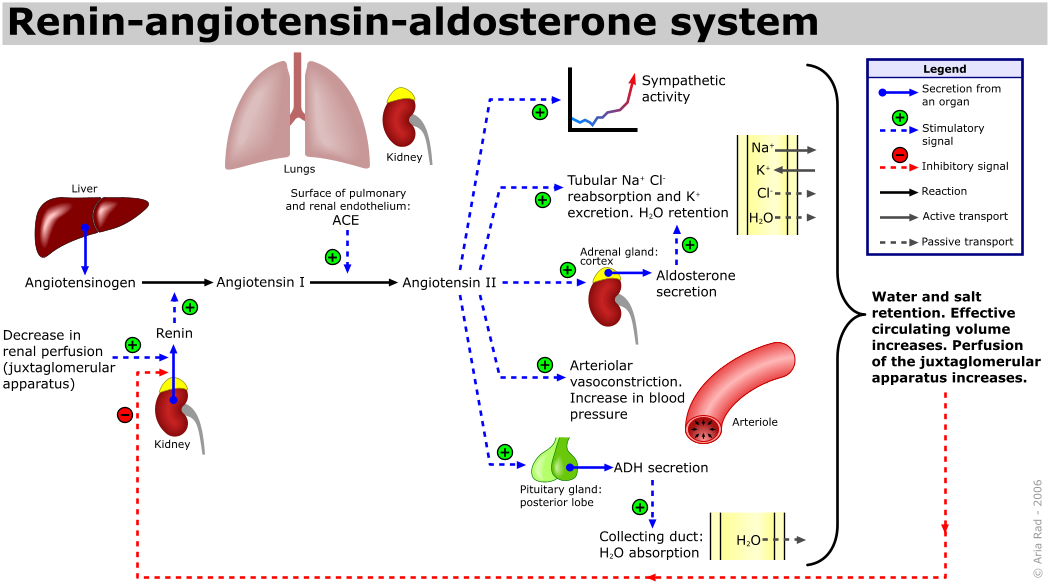
Drugs acting on the Renin Angiotensin Aldosterone System.
ACE Inhibitors.
List of agents
Sulfhydryl-containing agentsCaptopril (Capoten), Zofenopril
Dicarboxylate-containing agentsEnalapril (Vasotec, Renitec)
Ramipril (Altace, Tritace, Ramace, Ramiwin)
Quinapril (Accupril)
Perindopril (Coversyl, Aceon)
Lisinopril (Lisodur, Lopril, Novatec, Prinivil, Zestril)
Benazepril (Lotensin)
Phosphonate-containing agentsFosinopril (Monopril) is the only member of this group
Angiotensin II receptor blockers (ARBs)
Mode of action. Source: Wikipedia
These substances are AT1-receptor antagonists – that is, they block the activation of angiotensin II AT1 receptors. Blockade of AT1 receptors directly causes vasodilation, reduces secretion of vasopressin, reduces production and secretion of aldosterone, amongst other actions – the combined effect of which is reduction of blood pressure.
List of agents
Losartan (Cozaar)
Irbesartan ( Aprovel, Karvea, and Avapro)
Olmesartan (Benicar, Olmetec)
Candesartan (Blopress, Atacand, Amias, and Ratacand)
Valsartan (Diovan, Valtan, Valtan)

