
Updated SIGN clinical guideline: Pain management in adults with cancer
The Scottish Intercollegiate Guidelines Network (SIGN) updated a clinical guideline entitled “Control of pain in adults with cancer”.
An outline of the contents (drug therapy related) in this guideline for the treatment of cancer induced pain include:
- Principles of pain management: introduction, World Health Organization cancer pain relief programme, using the WHO ladder.
- Treatment with non-opioid drugs: paracetamol and non-steroidal anti-inflamatory drugs, bisphosphonates, antidepressants and anticonvulsants, ketamine, topical analgesia, cannabinoids
- Treatment with opioid drugs: choice of opioid, administration of opioids, titrating opioids, switching between strong opioids, conversion ratios control of opioid induced constipation
The WHO analgesic ladder is always present:
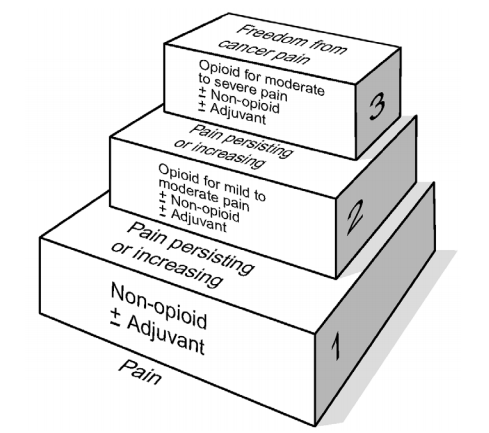
| WHO analgesic ladder step | Score on numerical rating scale | Analgesics of choice |
| 1 (mild pain) | <3 out of 10 | paracetamol and NSAIDs |
| 2 (mild to moderate pain) | 3 to 6 out of 10 | weak opioids( eg codeine or dihydrocoideine) plus paracetamol and NSAIDs |
| 3 (severe pain) | > 6 out of 10 | strong opioids (eg morphine, alfentanil, diamorphine, fentanyl, hydromorphone or oxycodone) plus paracetamol and NSIDs |
Download links